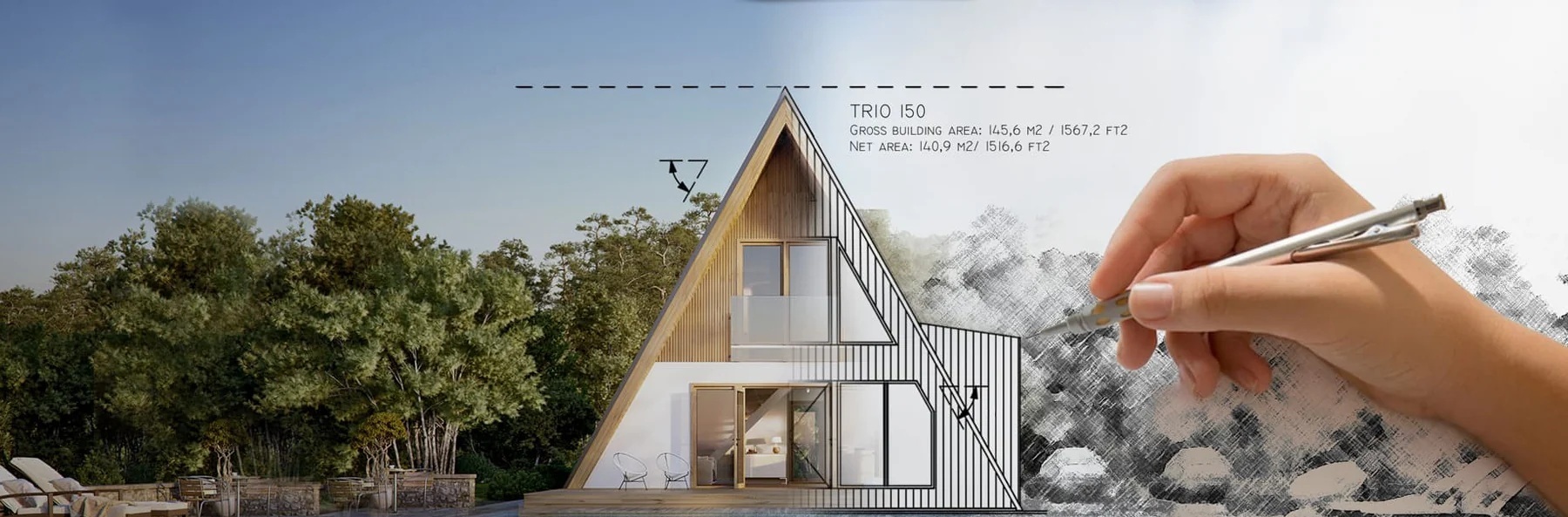
On this page:
Understanding the cost of building an A-frame kit home in Australia is one of the most important early steps when planning a project.
Unlike conventional houses that are built entirely on site, Avrame homes use prefabricated structural kits that form the core framework of the building. This approach can simplify the construction process and provide greater predictability during the early planning stages.
However, the kit represents only one part of the total build cost. Site preparation, foundations, internal finishes and approvals all contribute to the final project budget.
This guide explains how A-frame kit home costs typically work in Australia, what is included in the kit, and what additional expenses you should plan for when building an A-frame home.
If you're still exploring different layouts and sizes, you may also wish to browse our A-frame floor plans to understand the different models available.
If you're new to this building style, you may wish to start with our overview of A-frame homes in Australia, which explains how these structures work and why they are becoming increasingly popular.
The cost of building an A-frame home in Australia depends on several factors, including the size of the house, the complexity of the site and the level of interior finishes selected.
One important distinction is the difference between the kit home cost and the total build cost.
The kit home forms the core building framework, while other construction elements are sourced locally during the build.
The kit includes the engineered structural framework that forms the main load-bearing structure of the house. This system is prefabricated and delivered to site ready for assembly.
Additional construction elements such as foundations, insulation, electrical and plumbing services, and internal fit-out are arranged locally during the build process.
Because of this, the total project budget can vary significantly between sites. Factors such as soil conditions, slope, bushfire requirements and access can all influence construction costs.
To understand how the building process works from delivery through to completion, see our guide on how A-frame kit homes are built in Australia.
Avrame homes are supplied as prefabricated building kits that include the primary structural system along with key exterior and interior components required to assemble the A-frame shell.
Kit components are manufactured in Europe using strength-graded timber and building materials sourced primarily from Scandinavia, Germany and Estonia.
An Avrame kit (full kit) includes three main component groups: the structural kit, exterior kit and interior kit. For cost efficiency we recommend buying all three kits, but you may also choose to source some kit components locally. Our full kits include:
These components form the primary structural frame and building shell of the house, allowing the structure to be assembled efficiently once delivered to site.
Once the main structure is assembled, the remaining building stages such as insulation, services and interior fit-out can be completed using locally sourced materials and trades.
This approach provides flexibility for different construction pathways. Some clients choose to engage a licensed builder for the full build, while others explore the owner-builder pathway to coordinate parts of the project themselves.
Avrame homes are highly customisable due to their structural design. The A-frame system does not rely on load-bearing interior walls, which means internal room layouts can be modified without affecting the primary structural frame.
This allows significant flexibility when planning interior spaces. Room layouts, partitions and functional areas can be adapted to suit different lifestyles, block conditions or personal preferences.
Common customisation options include:
Interior layout changes do not affect the structural system and are therefore relatively simple to implement during the design phase.
More extensive design modifications may require additional architectural or engineering work depending on the scope of the changes.
Interior layout design changes are generally included during the planning phase, while additional customisation services start from approximately $600 AUD depending on the level of modification required.
Shipping costs include international container freight, insurance, customs processing and port handling. As a general guide, international delivery to an Australian port is around $6,500 AUD, including container insurance, customs clearance and port fees.
Domestic road transport from the port to your building site is arranged separately and starts from approximately $800 AUD, depending on distance and accessibility.
For smaller models it may be possible to share container space with other deliveries, which can reduce shipping costs. Clients may also choose to organise their own freight or customs arrangements if preferred.
Freight pricing can vary over time depending on global shipping conditions, fuel costs and logistics availability.
Cost components not included in the kit include:
The table below summarises what is provided in the Avrame Kit and what is arranged locally
| Provided in Avrame Kit | Typically Arranged Locally |
|---|---|
|
Structural timber Exterior cladding Roofing materials Windows and doors Interior cladding Assembly drawings |
Land purchase Site preparation Foundations Electrical and plumbing Insulation Interior finishes |
While the kit provides a clear starting point for planning a project budget, the final cost of building an A-frame home can vary depending on several site-specific and construction factors.
Every building project in Australia is influenced by local conditions, regulatory requirements and the construction approach selected. These factors can affect both the complexity of the build and the total investment required.
Some of the most common factors that influence total project cost include:
Because each building site is unique, final costs should always be confirmed with local builders, engineers and consultants during the planning phase.
Some clients choose to build their A-frame home through a licensed builder, while others explore the owner-builder pathway. Each approach has different cost implications and responsibilities.
When working with a licensed builder, the builder typically manages the construction process from start to finish. This includes coordinating trades, scheduling materials, supervising construction and ensuring that work is completed in accordance with local building requirements.
This approach can simplify the process for clients who prefer a fully managed construction pathway.
Alternatively, some homeowners choose to act as the project coordinator themselves through the owner-builder pathway. In this model, the property owner engages trades directly and manages the sequencing of construction.
The potential benefit of this approach is that labour costs can sometimes be reduced by coordinating trades independently or contributing to parts of the build process.
However, owner-builders also take on additional responsibilities. These can include organising contractors, scheduling work, managing site safety and ensuring that the project complies with local regulations and approval requirements.
Approval processes and responsibilities for owner-builders vary between states and territories. Before choosing this pathway, it is important to understand the obligations that apply in your location.
You can learn more about this approach on our Owner Builder Kit Homes Australia guide.
Regardless of the pathway selected, construction should always be carried out by appropriately qualified professionals where required by local regulations.
Avrame homes are available in several model series designed to suit different lifestyles, block sizes and budgets.
Rather than focusing on fixed pricing, it is usually more helpful to compare models by size category. Larger homes naturally require more materials and construction work, which influences both the kit cost and total build budget.
The table below provides a general overview of how the model series compare. Exact kit pricing and total build costs depend on site conditions, freight, engineering requirements and interior specifications.
| Model Series | Typical Floor Area | Typical Use | Indicative Kit Cost | Typical Total Build Cost* | Typical Build Time* |
|---|---|---|---|---|---|
| Solo Series | 17–38 m² | Tiny homes, studios, guest accommodation | $23,000 – $43,000 | $95,000 – $180,000 | 170 – 360 hours |
| Duo Series | 30–68 m² | Small homes, granny flats, lifestyle properties | $46,000 – $74,000 | $160,000 – $320,000 | 300 – 770 hours |
| Trio Series | 65–141 m² | Full-time family homes | $91,000 – $160,000 | $300,000 – $650,000 | 630 – 2100 hours |
*Build time varies depending on construction pathway, contractor availability and site conditions.
Each series includes several models with different layouts and floor areas. The best way to understand the differences is to explore the available designs and compare floor plans.
For a more detailed breakdown of individual models and layouts, see our guide to A-frame house plans and sizes.
In addition to the initial construction budget, many homeowners also consider the long-term running costs of their home.
A-frame structures naturally create a compact and efficient building envelope, which is one reason they are often used for tiny homes and compact dwellings. When properly insulated and constructed, this form can contribute to effective temperature regulation and reduced heating or cooling demand.
Energy performance ultimately depends on the full construction specification used during the build. Factors such as insulation levels, window performance, ventilation design and heating systems all influence the long-term energy efficiency of the home.
Avrame kits include triple-glazed windows and structural components designed to support efficient building envelopes. However, the final energy performance of the home will depend on the materials, systems and construction details chosen during the project.
Local energy assessors or building consultants can provide guidance on insulation levels and compliance with relevant energy efficiency requirements during the design and approval process.
Because every building site and construction pathway is different, the most accurate way to estimate project costs is to review your specific block, preferred model and intended construction approach.
Our team can help you explore suitable A-frame designs and explain how the kit system fits into the broader construction process.
If you are considering building an A-frame home in Australia, the next step is to review the available models and discuss your project requirements.
You can explore layouts on our floor plans page, or request a project overview through our Get a Quote form.
Providing details such as your location, preferred model and site conditions will allow our team to give a more accurate overview of the kit and the steps involved in planning an A-frame home project.
All pricing information provided on this page is indicative only. Final project costs depend on site conditions, approvals, engineering requirements, freight costs and construction choices.